Sunday, April 13, 2014

Final Blog Post, Due on April 14th

I completed my student ratings.
  • Which topics and theorems do you think are the most important out of those we have studied?
    • I believe that overall, I need to know the proof of induction, direct proof, contrapositive, and contradiction.  I feel that everything we did this semester kind of stemmed off of those, so a good review of those will help.
  • What do you need to work on understanding better before the exam? Come up with a mathematical question you would like to see answered or a problem you would like to see worked out.
    • I need to see more proofs by limits.  The whole limits thing has been difficult for me ever since we started, and it would be very helpful to get more help with that.
    • I will simply need to study the proofs on limits more.
  • What have you learned in this course? How might these things be useful to you in the future?
    • I learned a couple of things:
      • Direct proofs
      • Contrapositive proofs
      • Logical thinking
      • LaTex
      • Having a schedule for homework and blog posts that are due
    • I believe these things will be helpful to me as I continue to study and learn about math.  I'm grateful I took this class.

Tuesday, April 8, 2014

Section 12.5, Due on Friday April 11th

Continuity

What did I find difficult?
I like continuity.  Because this is the end of the semester, this is difficult for me to focus and understand.   I read through the chapter, but will need to complete the last homework assignment to understand exactly how to prove continuity.  I come to the table with a pretty good grasp of what continuity is, from my calculus experience.  The whole concept of proving is difficult to understand with just one pass over the reading material.  I love the graph on page 291.  That helps me understand continuity.

What did I find interesting/fun?
I really enjoy the whole concept of continuity.  It's fun to think about continuity, and a line that continues.  The whole discontinuous thing is something that never really pleased me mathematically.  I understand why things are discontinuous, but I like continuous functions so much better.  It just makes more sense to be connected, and not to be disparate.  I look forward to learning more on how to prove continuous functions.

Section 12.4, Due On Wednesday April 9th

The Fundamental Properties of Limits of Functions

What was difficult for me in this section?
It is still difficult for me to understand exactly what is going on in this section.  The past two homework assignments have helped me become familiar with limits and the syntax in proving limits.  I still think this is the most difficult part.  I understand basically how to prove a limit, but I misunderstand the syntax and the details.  I'm excited to continue learning about this and making it less and less difficult.

What did I enjoy/find interesting in this section?
I enjoy limits, like I've said before.  I also feel like a true mathematician when I am proving limits.  I enjoy the use of arbitrary value such as epsilon.  I also enjoy the feeling of writing a well written proof, that flows well.  I think that the path one takes in proving a limit helps to think through other problems.  It's all good.

Sunday, April 6, 2014

Section 12.3 Due on Monday April 7

Limits of functions

What was difficult for me?
It was difficult for me to understand the first vocab word of this section: deleted neighborhood of a.  For some reason, it's always been difficult for me to go through the syntax of definitions like that and come out with a clear understanding of what it means.  I have to hear it explained to me by the teacher.  Because I didn't understand the deleted neighborhood of functions,  it was difficult for me to understand the rest of the chapter.  I believe that with practice and an explanation in class tomorrow, I'll do just fine.

What did I find interesting?
I have always found limits interesting - maybe it's that whole thing where you find interesting what you don't quite understand.  I look at the first result to prove in the book, where the limit as x approaches 4 of (3x-7) = 5.  That's just so interesting to me.  There's a lot for me to understand, but I love how with limits you can get closer and closer and closer to a number, but not actually reach it.  It's just fascinating to me.

Thursday, April 3, 2014

Section 12.2, Due on April 4

Infinite Series

What was difficult for me?

Even when I was back in calculus, I had trouble grasping the concept of infinite series.  It was always difficult for me to understand, and I never really got what itwas trying to teach me.  I only know that some series converge to one, some diverge, and some converge to other numbers.  Looking at the proofs, I understand the proof by induction and the other proofs, but it will be a major learning process for me to completely grasp this concept.

What did I enjoy?

I thoroughly enjoy thinking about things going on forever.  When I was a little kid, I used to add 1+1=2, 2+2=4, 4+4=8, 8+8=16, 16+16=32, etc.

I enjoy the process of series, of patterns.  It's always been very interesting to me.  And to think that some of these patterns actually converge to a number, that is fascinating.

I love patterns.

Tuesday, April 1, 2014

Section 12.1 Due on April 2

What was the most difficult thing for me?
I understand the limit of sequences, but for me this chapter was difficult to understand.  It is tough to understand exactly what is going on.  I remember taking calculus, and we dabbled in proving a limit.  It was difficult to understand then.  I believe it's because there is different notation, and the whole distance and epsilon thing is tough for me.  With more practice, I will improve.

What did I find most interesting?

I remember learning about limits for the first time.  I remember learning what they are, and how we can get closer and closer to something without actually ever getting there. I enjoy the concept of limits, it's just difficult for me to understand exactly what is going on.  I look forward to having a more solid grasp on what limits are.

Sunday, March 30, 2014

Exam Review for Monday March 31

What theorem do I believe is most important?
I believe the whole numerality thing is going to be important for the exam.  You know, cardinality - how to prove a denumerbale set, how to prove an uncountable set.  That was a big part of the last two sections of material that we covered, and I think that a lot of what we will see on the exam will build off of this.

What kinds of questions do I expect to see on the exam?
The same kinds that there always are - for the multiple choice, I believe there will be questions that deal with the definitions of the terms that we are given.  I can see that definitely happening, as it has happened on the last two tests.

And for the other free response questions, I can see them asking us to solve example problems, similar to the ones from the homework and the book.

What do I have a question about?
I would like to review the division algorithm, that was what gave me a lot of trouble.

Particularly problems from section 11.2  Any of those problems would be great to review to help me nail down my understanding of the Division Algorithm.


Thursday, March 27, 2014

Sections 11.5-11.6, Due on Friday March 28th

Section 11.5 is about relatively prime integers.  
Two integers a and b, not both 0, are called relatively prime if gcd(a,b)=1.

Section 11.6 is about The fundamental theorem of arithmetic.
Every integer > 2 is either prime or can be expressed as a product of primes; that is n=p1p2...pm  , where p1,p2,...pm are primes.  Furthermore, this factorization is unique except possibly for the order in which the factors occur.

The difficulty for this sections is that there are so many new theorems and corollaries to remember.  That is difficult to keep them all straight and to not get confused about them.  Reading through them is okay, but I fear in my ability to be able to use them effectively later on.  I will need more practice with both of these sections in order to be efficient.  Sometimes it is difficult to read over the proofs, and I feel like that happened to me in this chapter as well...

What I enjoyed about these sections is the new material.  It is neat learning this stuff and seeing how it can be used in such simple ways to prove such complex things.  Maybe it is not that way actually, but it sure feels like that to me.  I really enjoyed reading over corollary 11.18 which says Every integer exceeding 1 has a prime factor.  I know this to be true, but it's cool to see it proved later on with the lemma and the following proof.
-nap

Tuesday, March 25, 2014

Sections 11.3-11.4, Due on Wed Mar 26

Here I will analyze and give my thoughts on Sections 11.3 and 11.4 of Mathematical Proofs: A transition to advanced mathematics.

11.3 - Greatest Common Divisor
An integer c \ne 0 is a common divisor of two integers a and b if c | a and c | b.

The greatest common divisor of two integers a and b, not both 0, is the greatest positive integer that is a common divisor of a and b.

The whole concept of common divisor and greatest common divisor is something that is not too difficult for me to understand.  I remember learning this as a younger child.  It makes sense - to find the biggest number that nicely divides into two numbers.  That is the GCD.  I kind of like the thought of this.

I believe I will have difficult in proving this - at first.  I can see myself learning and understanding this better.

Here are a couple theorems from the section (typing them up helps me remember them):

  • Let a and b be integers that are not both 0.  Then gcd (a,b) is the least positive integer that is a linear combination of a and b.  


  • Let a and b be two integers, not both 0.  Then d = gcd(a,b) IFF d  is that positive integer which satisfies the following two conditions:
    • 1) d is a common divisor of a and b;
    • 2) if c is any common divisor of a and b, then c | d.


I enjoy learning about GCD.  It kind of makes sense to me, which would be why I like it.  I enjoy taking a look at linear combinations - those have always made sense to me.

11.4 The Euclidean Algorithm
This is the algorithm for determining d=gcd(a,b).  It "makes use of repeated applications of the Division Algorithm and the following:

  • Let a and b be positive integers.  If b = aq + r  for some integers q and r, then gcd(a,b) = gcd(r,a).
This was difficult to understand at first, but I can see the usefulness of it and the thought process of it by looking at the example.  For example, we want to find the following:  d = gcd(374,946).

We go down the line using the Euclidean Algorithm, and first divide 946 by 374.  374 goes into 946 2 times with a remainder of 198.  We then divide 374 by 198.  This goes in once with a remainder of 176.  We then divide 198 by 176.  This gives us a remainder of 22.  We then divide 176 by 22, which goes in 8 times.  Thus, gcd(374,976) = 22.

I find this whole process fascinating and I look forward to learning more about it.  I did have trouble understanding the last example in the book.  With more practice, I should be able to understand more.


-nap

Sunday, March 23, 2014

Sections 11.1 and 11.2, Due on Monday March 24th

What was difficult for me?
I understood pretty well the divisibility property of integers.  I understood what prime and composite numbers are.  That part wasn't too difficult for me.

What was difficult to understand for me (but will become easier with more practice) is the division algorithm.

The Division Algorithm: For positive integers a and b, there exist unique integers q and r such that b= aq + r and 0 < r < a.

I will need to practice with this chapter to understand it.  I look forward to that.

What was interesting to me?
I remember learning to divide for the first time as a little kid.  I think I was in 3rd grade.  It's really cool to now look at the division algorithm and put together how it makes sense.  I enjoyed reading through this section, and even though there were parts that were difficult for me to understand, I enjoyed the section overall.  I like learning the deeper meaning of simple things that I once learned.  It's really neat.


Thursday, March 20, 2014

Section 10.5, due on Friday March 21

This blog will be on the second half of 10.5 - the Schroder-Bernstein Theorem.

This is a very short section.  We will talk about the Axiom of Choice.

Theorem: The sets P(N) and R are numerically equivalent.

Corollary: The sets 2^N and R are numerically equivalent.

What was difficult for me?
This section was not difficult for me.  It was rather simple after the discussion in class yesterday.  The Axiom of choice states For every collection of pairwise disjoint nonempty sets, there exists at least one set that contains exactly one element of each of these nonempty sets.

I enjoy this section, and it is not too difficult for me to understand the theorems.  The only thing that is difficult for me is the proving of the theorems.  And since this is a proofs class, I need to focus more on this.  I enjoy knowing the proofs and seeing how they work - it is the thinking through them in the moment that is difficult for me.  I look forward to learning more about how to prove the theorem and corollary above.

What did I enjoy most?
I enjoy counting the cardinality of sets. While at time it is counterintuitive (an infinity can be bigger than another infinity, but they are still numerically equivalent), it does make a lot of sense and is quite fun to work with.  I enjoy showing that there are one-to-one functions and the difference in numerical equivalence.  I find this interesting.

Tuesday, March 18, 2014

Section 10.5 up to Theorem 10.18, Due on Wednesday March 19th

The Schröder-Bernstein Theorem

What was difficult for me?  Nearly everything.  Well, at first.
Then I took a step back and really thought about what this theorem was saying.  This allowed me to clear my thoughts and think about what this was really asking.  It's really simple.  If the cardinality of set A is less than or equal to the cardinality of set B, and the cardinality of set B is less than or equal to the cardinality of set A, then the cardinality of set A must be equal to the cardinality of set B.  That's the only thing that makes sense.  You can't have two sets that are BOTH less than each other.  This theorem actually makes a lot of sense when you sit back and think.

The most difficult part of this reading was the reading leading up to the various theorems (lemma 10.16, theorem 10.17).  It was difficult to read through these.  But, it all started making sense once I took a step back.  

What was the most interesting for me?  I like the simplicity of this theorem.
There is a part of the reading, Theorem A, that says "For every two sets A and B, exactly one of the following occurs: (1) |A|=|B|, (2) |A| < |B|, (3) |A|>|B|."  This contains a lot of truth.  When comparing two things, either one is greater and one is less, or they are equal.  There is no disputing this.  This is always true, even though we might not have the information to prove that this is true, meaning, we aren't sure about the characteristics of the sets.  When we know about the sets, we can tell some important things about them - what is greater, lesser, or if they're equal.  It will now be interesting to prove this.


Sunday, March 16, 2014

Section 10.4, Due on Monday March 17th

Section 10.4 - Comparing Cardinalities of Sets

Two nonempty sets A and B have the same cardinality if there exists a bijective function f : A -> B.

Theorems:

  • For every nonempty set A, the sets P(A) and 2^A are numerically equivalent.
  • If A is a set, then |A| < |P(A)|.

What was difficult for me?
I learned the definition of the cardinality of a set earlier this semester.  It was a foreign concept to me, but know I understand it.  The definition, for those of you that don't know, is below.


The understanding of the cardinality is not too difficult, but the proving of the difference of cardinalities of sets has been difficult for me to understand.  I understand that you have to show a bijective function, which is simple enough.  It's the in between steps (explaining, next steps, etc.) that are tough for me.  Those are the parts that I mess up on and I will need more practice before I master these concepts.

What did I find enjoyable?
I like the enjoyable nature of cardinality - it's counting!  I like counting.  When I was a kid I would count things.  
I would take 1+1=2. 
Then 2+2=4.  
Then 4+4=8.  
8+8=16.  
16+16=32.  
32+32=64.  
64+64=128.  
128+128=256.  
256+256=512.  
512+512=1024.  
1024+1024=2048.

I JUST DID THAT FROM MEMORY. That's what I find interesting about cardinality and counting.  Now it will be fascinating to learn more about comparing cardinality.  It can't be that much harder than counting, right?

And, I also think it's interesting that cardinality and cardinals have nothing to do with each other.


Thursday, March 13, 2014

Section 10.3, due on Friday March 14th

What did I find difficult?
The concept of uncountable sets was difficult for me to understand at first.  When I began reading the chapter, I thought I felt good about it all.  I thought "you know, I understand what an infinity set is.  When you have an open interval, you can get infinitely closer to the number at the end of the interval without ever reaching it.  But, when I started getting to the proofs, things got more difficult for me.  I understood that an open interval is infinite, but I was struggling with the proofs of it all.

I will need more experience with solving proofs, and will need to hear something think out loud when solving a proof showing that a set is uncountable.  With that, I should be better at understanding this material.

What did I find interesting?
The whole idea of uncountable sets is fascinating.  My whole life I've been dealing with finite sets, things I can wrap my head around.  Now, things are getting a lot bigger a lot faster than I ever thought possible.  It's exciting.  Reading through the proofs are really cool.  Proving that something is infinite is a way cool thing to think about.  I just lack the faith that I can do it myself right now.

It's an interesting to think about - infinity.  Something so big that it never ends.  It keeps getting bigger and bigger and bigger or smaller and smaller and smaller.  The other day, I let a balloon go, and it floated up and up and up and up.  It got smaller and smaller and smaller.  I stood riveted, watching it float away.  I loved watching it.  It got to the point where I feared blinking would prohibit me from finding it again.  It kept getting smaller and smaller before it disappeared behind buildings.  This is what infinitely smaller is for me.  I'm excited to be able to prove that.

Tuesday, March 11, 2014

Section 10.2, Due on March 12

10.2 Denumerable Sets

Definition - a set A is called denumerable if |A| = |N|, that is, if A has the same cardinality as the set of natural numbers.

A set is countable if it is either finite or denumerable.  Countably infinite sets are then precisely the denumerable sets.

A set that is not countable is called uncountable.  An uncountable set is necessarily infinite.

What was difficult for me?
The whole concept of countably infinite was difficult for me.  I always thought that being infinite meant that you couldn't count it.  But I guess it is.  The best example that I understand from it is the sands in the sea or the stars in the sky - there is a limited amount of them.  Understanding this concept this way made a lot more sense.

Reading through some of the theorems showed that this section will just be understanding what certain words mean and when to use them.  With practice, all will be well.

What did I find interesting?
I love this way of thinking.  It's really neat to think like a mathematician - to think of thinks as countable, countably infinity, or uncountable.  I also had never heard of the word denumerable before.  I'm excited to start using that in my daily vocabulary.  I found it interesting to look at the figures they used in the book to see how to classify groups of objects (sets).  I'm just fascinated by this way of thinking.

Sunday, March 9, 2014

Section 10.1, Due on Monday Mar 10

Numerically Equivalent Sets
Two sets A and B (finite or infinite) are said to have the same cardinality, written |A| =|B|, if either A and B are both empty or there is a bijective function f from A to B.  Two sets having the same cardinality are also referred to as numerically equivalent sets.

What did I find difficult?
You know, the one theorem 10.1 was difficult for me.  I had a tough time understanding how numerically equivalent sets played into the theorem.  The definition of numerically equivalent sets seems pretty easy to me, but I'm not sure if I'm actually understanding what these sets are.  I believe I will need more practice and explanation on what these sets are.

What did I find interesting?
I love the idea of cardinality.  Google defines cardinality as "the number of elements in a set or other grouping."  I think it's a natural thing to do - to count the number of elements in a group.  It's a very simple thing to do, but it shows an important property of a group.  The number of elements tells you a lot about what you can do with that set or group.  I'm excited to learn more about this.


Thursday, March 6, 2014

Due Friday March 7th

  • Which topics and theorems do you think are the most important out of those we have studied?
  • From what we have studied, I would say that the basic proofs of direct, contrapositive, and contradictory would be the most important.  I feel that we still see these kinds of proofs often, no matter what kind of proof we are doing.  I feel like I have a solid grasp on these concepts, but will need to be doing some reviewing before I feel solid.

  • What kinds of questions do you expect to see on the exam?
  • I expect there to be the same kinds of questions on this exam that there were on the previous exam.  I felt like I was adequately prepared for the last exam, but did not perform as well as I wanted to.  I must've been taken by surprise by the material of the test - even though it was very fair.  I believe that if I am to study the material, and go over the homework, I will do well on this exam.

  • What do you need to work on understanding better before the exam? Come up with a mathematical question you would like to see answered or a problem you would like to see worked out.
  • For the exam, I believe the questions involving modulo n are going to be the most difficult for me.  I think back on the homework assignments that we had that involved modulo n, and those were the most difficult for me.  What I would like to review are the different methods and ways to think through solving a modulo n problem.

Tuesday, March 4, 2014

Due March 4th, Chris Danforth

When I first heard Chris Danforth speak, the first thing I did was go and follow him on Twitter.  Anyone of his brilliance is sure to continue producing quality work, and I look forward to following him and his work.  https://twitter.com/ChrisDanforth

I found the topic fascinating.  He wants to cycle through data and be able to track how happy/sad the people are feeling.  It was so interesting to see the process which they thought about solving the problem... The data they wanted to use consisted of song lyrics, Google books (books that have been scanned and read into Google) and tweets.  This was fascinating to see.  They then went through and had to set the dial on what were happy words, what were sad words.  I found this entire process to be fascinating.  They used a service called Mechanical Turk on Amazon, where they paid people to go through and rank words.  This was fascinating to me.  He kept using the term "set the dial" on the experiment, meaning he wanted to come up with a robust way to classify the data.

Once the data was collected, he got rid of the noise (the,and,of,it) in order to amp the signal!  The signal and the noise.  Great book by Nate Silver I believe.

Overall, I thought the analysis and the computational techniques were incredible.  And plus Chris Danforth was such a fascinating individual.  Going to this talk made me want to learn more about scraping data - and it made me want to start doing cool research and investigate things that interest me.

Section 9.6-9.7, due on March 5th

What did I find difficult?
Chapter 9.6 is about inverse functions.  I had more difficulty with this section that I did with 9.7.  Prior to reading this chapter, I did understand that the inverse of a point is just switching the x and y term.  For example, if you have (x,y), then the inverse relation of that would be (y,x).  Reading through the proofs led to difficulties in understanding how to go about proving the inverse relations.  I will need more practice in solving these problems.

Chapter 9.7 is about permutations.  We are learning about permutation testing in my Nonparametric Statistical Methods class.  I find them very interesting.  From the book, a permutation of (or on) a nonempty set A is a bijective function on A, that is, a function from A to A that is both one-to-one and onto.  For 9.7, I was confsued by the illustrations of 213 about the composition of any two permutations.  I thought I understood that, but the visual given with the matrices was difficult for me to understand.

What did I find interesting?
Like I said before, we are learning about permutation tests in one of my stats classes ( 435 nonparametric with Dr. Grimshaw).  From an earlier probability class I have taken at BYU I have learned how to count the number of permutations.  I like the drawings and visual explanations that they used in the book on page 212 to show the ways to represent the permutations of {1,2,3} in a 2x3 matrix.  

Sunday, March 2, 2014

Section 9.5, Due on Monday March 3

What do I find difficult?
When I looked at the visual for the composite function of g o f in Figure 9.2, I got really nervous.  Holy smokes that looks difficult.  At first glance, it looks like a composite function is a function within a function.  Or a combination of functions.  If you run one function, the output of that function ends up being the input of another function.  That's what I understand it to be.  If it is really that simple, then I think I got it.  But if somehow the functions interact and relate other than that, I'm going to be confused.
With associative functions, h o (g o f) and (h o g) o f are associative if these two functions h o (g o f) and (h o g) o f.  This seems to be pretty straight forward.  I look forward to learning more about this.


What was interesting to me?
I've always found linear combinations interesting. When there is a combination of functions, I think it provides for interesting opportunities and situations.  The composition g o f, defined by (g o f)(a)=g(f(a)) for all a \in A.  I think this is a very basic concept, and I look forward to learning more about it.  I think we can do some interesting things with it, in finding different functions and looking at the interesting way that things interact.  I think we're going to find a fascinating way that functions interact, and I'm excited to learn more about that.

Viva Espana.

Tuesday, February 25, 2014

Section 9.3-9.4, Due on February 28th

I'm posting this blog early because I am going to be out of town over the weekend.

What was difficult for me?
A function f from a set A to a set B is called one-to-one or injective. if every two distinct element of A have distinct images in B.

One to one was tough to understand at first, but then I made sense of it!  I understand it that there are unique values for the response, that you can't plug in a 1 and get a 2, and then plug in a 4 and get a 2.  That would make the function not one-to-one.

A function A -> B is called onto or surjective if every element of the codomain B is the image of some element of A.  This was difficult for me to understand.  I will need more help on understanding this.

Bijective or a one-to-one correspondence functions are both one-to-one and onto.  This seems alright to understand, once I understand onto.  The book says, again, "if every element of the codomain B is the image of some element of A."

This website seems to help me out a lot..... http://www.regentsprep.org/Regents/math/algtrig/ATP5/OntoFunctions.htm

What did I find interesting?
I took linear algebra at one point, and I learned all of these things for the first time.  I didn't really understand it at that time. Now I'm beginning to understand it.  Onto and one-to-one are really interesting ways to think about functions.  Learning about all of these different ways to classify functions are helping me understand more about functions.  That's what I find really interesting - finding different ways to understand functions.  I thought I knew a lot about functions, but I didn't really.  Learning about these different types of functions hopefully really help me.

Section 9.1-9.2, Due on February 26th

What was difficult for me?
It was difficult to go back to and understand the implicit meaning of a function.  I've been in so many math classes in my life that I thought I knew pretty well what a function was.  I've always understood it to be kind of like a machine - you put something in and you get something out.  You have an x, you put it in, and you get a y out.  I wasn't sure of this "domain," "codomain," "image," "mapping" vocabulary.  I think this is the most difficult part for me - the introduction to a new vocabulary that deals with something I feel like I have a pretty good grasp on.

What did I find interesting?
I find section 9.2 "The Set of All Functions from A to B" interesting.  It's interesting to look at the set of all functions from A to B by B^(A).  It says in the book that this is a peculiar notion, it is quite logical.  This is the truth.  You take the number of elements in B, and raise it to the number of the elements in A.  This makes a lot of sense.  I'm excited to see how this will play into proofs later on.

Sunday, February 23, 2014

Section 8.6, Due on February 24th

The Integers Modulo n.

What was difficult for me?

This whole section was difficult for me to understand.  Most of the time that I read the book, I can understand what is going on.  But this time, I was very lost.  On page 190, I'm confused about residue classes.

I do understand a little bit the "closed under addition" and the "closed under multiplication" parts.  This part seems intuitive to me.  However, I have difficult with residue classes and well-defined.  I am trying to understand these things, and while the reading helps, there is no way that I could prove them.  I hope that with the homework I can improve.  I read the last proof on page 191-192 and it was difficult for me to understand.

What did I find interesting?
First,  I really think the concept of an integer is interesting.  An integer is a whole number - not a fraction, or a part of a whole number, but a whole number.  I think it's really interesting that you can divide a number by another number and get a whole number.  The whole congruence modulo n thing is really interesting .  I really like the closed under addition part of this chapter, as it illustrates an interesting way to think about addition.  The same goes for multiplication.  Equivalence classes are also very interesting - I like to think of them as "solutions for the problem," meaning that these classes help keep the congruence modulo true.  I hope to be able to learn more about these and apply the.

Thursday, February 20, 2014

Rod Forcade : Material Lattices

There were black dots.  Then there were green dots.  Then there were blue dots.  It seems that these lattices consist of lines drawn through pegs in a board.

Prior to coming to this lecture, I had no idea what lattices were.  And now, after the lecture, I'm still a little lost.  I do understand that they are like pegs in a board.  They can span a vector space.  They can be used to describe shapes.

But now that I'm here, I'm seeing that this is like linear algebra.  From linear algebra, I remember matrices and the importance of basis matrices.  I think that lattices and matrices are somewhat similar?

In linear algebra, it was very difficult for me to grasp the concept of matrices, with determinants, spanning, etc.  Being back in this lecture brings me back to those days.  It's interesting to recognize and remember those things that I once learned.

I do like the principle of linear combinations.  That seems to make a lot of sense to me.  A lot of this other stuff is over my head, but I know what that is, I'm comfortable with it, I like it.

All and all, these lattices are interesting.  There seemed to be a good turnout at the talk, and the cookies and brownies were delicious. 

Section 8.5, Due on Friday Feb 21st

What did I find difficult?
Congruence Modulo n.  a is said to be congruent to b modulo n, written a = b (mod n) if n | (a-b).
Division Algorithm.
This was a difficult chapter to understand.  Congruence Modulo n.  I understand the attributes of equivalence relations pretty well, but it is difficult for me to see how these congruence modulo n's work with reflexive, symmetric, transitive.  Reading through the example seems simple to me, but I'm not sure how I would be able to do this on my own.  I do look forward to trying this though.

I am also confused in how we should go about defining the distinct equivalence classes.  I realize this is from a few chapters back but I am confused at how this is to work with congruence modulos.  I guess the only way to learn is by doing.

What did I find interesting?
I find it interesting reading through these proofs, especially since they are congruence modulos.  I am still getting to know these congruence modulos, understanding what they're about and how their equivalence classes can be proved.  Walking through these step by step seems to make sense.  I only wonder how I am going to deal when the homework comes around.  I think I find this congruence proofs with equivalence classes interesting because it's a new concept.  I hope to learn more about it and that it can teach me how to think.  I hope to see that this is important in programming - I feel that so much of programming is math.

Tuesday, February 18, 2014

Sections 8.3 and 8.4, due on February 19th

What did I find difficult?
A relation R on a set A is called an equivalence relation if R is reflexive, symmetric, and transitive.
So, if a relation has all three of these properties, then it is an equivalence relation.

An equivalence class is the class of all members of a set that are in a given equivalence relation.

I found equivalence classes to be relatively simple to understand.  Reading through the example problems did not give me much trouble.  I imagine that as we get more into this, I will come across more difficult applications of equivalence relations.

On the other hand, reading through the properties of equivalence classes was difficult for me.  I understand what an equivalence class is (at least I think I do), but in proving different properties of equivalence classes, I'm having trouble.

What did I find interesting?
I find the concept of equivalence classes interesting.  I'm still having trouble understanding 8.4, so I'm going to focus on 8.3.  It seems to be intuitive that if R is reflexive, symmetric, and transitive then it is an equivalence relation.  For the equivalence class, I like this [a] = {x \in A : x R a}  My understanding is that this consists of all elements that are related to a.  

It made sense when it said, loosely speaking, that [a] consists of the relatives of a.  It also makes sense that the equivalence classes form a partition of the set.


I feel that this is slightly different from other chapters, but I like the way of thinking.  I can see how this will be helpful later on, maybe in proving parts of a statement in order to prove the whole thing true.

Sunday, February 16, 2014

Sections 8.1 and 8.2, due on February 18th

It's currently 62 degrees in Newport Beach.  For some reason, I find myself in Fashion Island Mall with my computer and my math book, surrounded by palm trees, wealth, and some kids next to me playing games.  What a random, awesome world.

Anyways, sections 8.1 and 8.2

Let's talk about Relations and Properties of Relations.  And just so you know, I'm not talking about relations of people.  If you want to get my thoughts on stuff that's more than just math, go to spanishnap.blogspot.com

What Did I Find Difficult

For this reading, I only found difficult the introduction to the concept of relations.  Particularly, I found the following concepts difficult at first, only because they were so new:


  • Let A and B be two sets.  By a relation from A to B we mean a subset A x B.  


  • That is, R is a set of ordered pairs, where the first coordinate of the pair belongs to A and the second coordinate belongs to B. 


  • If (a.b) \in R, then we say that a is related to b by R and write a R b.  

I believe that with time and with further learning of these concepts I will come to understand them better.  On page 176, it says that "Although this may seem like a fairly simple idea, it is very important that we have a thorough understanding of it."  I did not really understand what it was saying, but after reading that, I went back and tried to understand it more.  I guess it was difficult for me because it is a new way about thinking of ordered pairs.  


What Did I Find Interesting
What I found interesting about this reading was that which I also found difficult - the thinking of ordered pairs in new ways.  It's neat to think about how 

  • "A relation R defined on a set A is called reflexive if x R x for every x \in A."  
  • "A relation R defined on a set A is called transitive if whenever x R y and y R z, then x R z, for all x, y, z \in A." 
  • The distance between two real numbers a and b is |a-b|.
I can see how these ways of thinking about cartesian products and ordered pairs will be helpful in the future.  I look forward to learning more about them and doing more with them.

Thursday, February 13, 2014

Section 6.4, due on February 14th

Section 6.4 The Strong Principle of Mathematical Induction!

What was difficult for me?
The Strong Principle of Mathematical Induction - for each positive integer n, let P(n) be a statement.  If

  1. P(1) is true and
  2. the implication "If P(i) for every integer i with 1 < k, then P(k+1)" is true for every positive integer k, 
then P(n) is true for every positive integer n.

In a recursively defined sequence {An}, only the first term or perhaps the first few terms are defined specifically, say a1, a2, ...., ak for some fixed k \in \textbf{N}.

I don't really understand the definition of a recursive sequence.  The definition in the book is difficult to understand.  I look forward to learning more about this in class tomorrow and understanding how it works.

At first, I didn't understand what the difference between the Strong Principle of Mathematical Induction.  Then I looked online, and went to a website math.stackexchange.com and I found this:

"The only difference between regular induction and strong induction is that in strong induction you assume that every number up to k satisfies the condition that you wish to prove whereas in regular induction you only assume that some integer k satisfies this condition."

Based on that explanation, that is what I understand the Strong Principle to be.  It picks an m and a k, and proves that if m is true, then all values leading up to k are true.  Interesting stuff.


What did I find interesting?
You know, at first thought I really didn't think there was going to be too much difference between the Principle of Mathematical Induction and the Strong Principle of Mathematical Induction.  But after some analysis and thinking through things, I realize that there indeed is a difference.  With normal PMI, you prove a point is true and then prove that the point directly after it is true as well.  With Strong PMI, you prove that a point is true, and then prove that ALL points leading up to another point k are true.

I can see how that would be helpful.  Instead of proving the Domino method with just two dominoes, you can prove that if there is a domino is one spot, and then that there is another domino in another spot, you can prove that all the dominos between your two original dominos will fall.  Now that is cool stuff.

Tuesday, February 11, 2014

Section 6.2, due on February 12th

Section 6.2 A More General Principle of Mathematical Induction

What did I find difficult?
The Principle of Mathematical Induction
For a fixed integer m, let S = {i in Z: i > m}  For each integer n in S, let P(n) be a statement.  If

1) P(m) is true and
2) the implication   If P(k) then P(k+1) is true for every integer k in S,

then P(n) is true for every integer n in S.

I'm beginning to understand induction, but I'm still having a tough time with it - mainly with the applications.  It makes sense to me to prove that the smallest one is true, and then to prove the "domino effect" is true.  I understand the concept - if one is true, then the next one is true - but it's hard for me to prove that in different cases.

What did I find interesting?
I really like the thought of induction - I can see how it is very useful.  In looking through the results and their proofs, I can see the genius in applying the induction thought process.  I'm excited to continue learning about it.

I really like the simple proof in result 6.9.

"For every nonnegative integer n, 2^n > n.  We prove that the inequality holds for n=0 since 2^0 > 0.  Assume that 2^k > k, where k is a nonnegative integer.  We show that 2^(k+1) > k+1.  When k=0, we have 2^(k+1) = 2 >1 = k + 1.  We therefore assume that k > k + 1.  
By the Principle of Mathematical Induction, 2^n > n for every nonnegative integer n."

I can see how the simple inductions work.  I am nervous to see how I do with the more difficult inductions.  But I look forward to it.

Saturday, February 8, 2014

Section 6.1, due on February 10

The principle of mathematical induction.  

What did I find difficult?

A number m in A is callde a least element (or a minimum or smallest element).

I've heard of induction in my past math classes - but I've never really understood the principle.  I cannot quantify how many points I've lost on proofs where the principle of induction could be used to show the proof to be true.  I was a little intimated with learning induction, due to my failure to understand it in the past.  That was what I found most difficult - overcoming my past fears of not knowing induction.  Now, this is what I understand induction to be:

For each positive integer n, let P(n) be a statement.  If 

1) P(1) is true and
2) the implication
If P(k), then P(k+1).

is true for every positive integer k, then P(n) is true for every positive integer n.

I understand a little more about what induction means.  I believe with more practice, I will understand it more.

What did I find interesting?
I did some more research on the principle of induction.  This is what I came up with - 

1. Show that it is true for the first one.
2. Show that if any one is true, then the next one is true.

It's interesting - every website I look on to learn more about the mathematical principle of induction teaches the principle using dominoes.  The domino effect is this:

1. the first domino falls.
2. if any domino falls, the next domino will fall

This makes more sense!  If the first domino falls, it will cause more dominoes to fall.  Eventually all dominoes will fall.  Understanding this makes the principle of induction hit home.  I mean, what kid hasn't built a line of dominoes, only to knock them down? If I can knock down the first one, then the next one will fall, and the next one and the next one and the next one.  Eventually, all of them will fall!

Thursday, February 6, 2014

PreExam Questions, Due on February 7

  • Which topics and theorems do you think are the most important out of those we have studied?
As I prepare for this test, I have a couple different feelings about what is most important.  I really enjoy tangible problems - examples that I can see worked out.  I really enjoy direct proofs, contrapositive proofs, contradiction proofs, counterexamples, etc.  I think each of those are truly important.  But I believe the most important thing that we have studied is the syntax for writing sentences.  I think writing sentences using quantifiers (both existential and universal) and understanding how to negate these - that is the most important topic we have covered.  I think this because with a solid understanding of how to take a result that you need to prove and change it into a sentence with P, Q, R, etc. then you can more effectively see and apply other proofs.
  • What kinds of questions do you expect to see on the exam?
I expect to see problems that are similar in style, difficulty, and content as to those that we had on the homework.  I think there will be more applications of proofs (direct, contrapositive, contradiction, existence, etc.) because those proofs show that you know how to do a multitude of things.
  • What do you need to work on understanding better before the exam? Come up with a mathematical question you would like to see answered or a problem you would like to see worked out.
I think before the exam I would just like to go through a handful of problems and talk about strategies for noting how to recognize which proof to use in different scenarios.  I plan on going through all of the homework problems, recognizing patterns of how to go about proving different results.  I feel good about many of the definitions and notation.  I just want to make sure I know how to recognize results, and then how I can plan on proving them.


Tuesday, February 4, 2014

Sections 5.4-5.5, Due on February 5th

What did I find difficult?
I originally had difficult understanding existence proofs.  The reason for this?  The extent of my proving abilities consisted mainly of contradiction, direct proofs, contrapositive.  You could say that learning existence proofs was like doing a new exercise - it was weird working through them and understanding it, but once I got it, I liked it.  After reading, I think existence proofs are pretty self explanatory.  My understanding of them is that I just have to prove one case - that such a case exists.  I like the story about the mathematician David Hilbert:

"There is at least one student in this class... let us name him 'X'... for whom the following statement is true: No other student in the class has more hairs on his head than X.  Which student is it?  That we shall never know; but of his existence we can be absolutely certain."

Before reading the example, I was strictly going off of the definition of existence proofs.  But this example helps me understand that we just need to prove the existence of something.  I really like it.

What did I find interesting?
Disproving existence statements.  I like the existence way of going about, solving a proof.  I then find it fascinating that you can disprove these existence statement.  I am fascinated with the way set notation works, and how the negation of an existential quantifier turns that quantifier into a universal quantifier.  I really like this way of solving a problem, and proving whether something exists or whether it doesn't exist.  I like that I am able to apply what I learned earlier on in the course and use it in such a way that it makes me understand what is going on.

Sunday, February 2, 2014

Sections 5.2-5.3, Due on February 3rd

What was difficult for me?
Proof by contradiction was difficult for me.  C : P ^ (~P) ,    (~R) => C

~R => C is true and C is false, then ~R is false and so R is true.

The syntax and the way of thinking is difficult for me.  It's just a new way to go about proving something.  It's fascinating to learn these different concepts of solving proofs.

However, this one is difficult for me to grasp.  Even reading through the practice problems, I struggled to really grasp what is going on.  I can see the parts and kind of how they fit together, but it would be difficult for me to understand - at least right now.  With practice and with more practice problems I hope to be able to grasp it.

Contradiction-a combination of statements, ideas, or features of a situation that are opposed to one another 


What did I find interesting?
In section 5.3, I really like being able to review the different techniques that I've been introduced to: direct proof, proof by contrapositive, proof by contradiction.  As I think back on what I read, and the homework that I've already done with direct proofs and contrapositive, I can see real progression in my learning of these proofs.

I also find the idea of a contradiction really interesting.  I remember being a kid and learning the definition of a contradiction.  When someone would say something that went against what they originally said or meant, I would smartly reply, "You are contradicting yourself."  I intuitively knew what contradiction was, but now I see what it truly is and how it can be powerful in proofs and in logical thinking.  

I think the thing that I really find interesting about these three different proofs is that you start a proof with the end goal in mind: you know what you want to prove.  There is a table on page 117 that I really like.  It talks about the first step of a proof, and then with remarks/goal.  I think that if I really learn the ins and outs of this table, I will be better able to go through proofs and really solve them better.

I really look forward to that.  

Thursday, January 30, 2014

Sections 4.5-4.6 and 5.1, Due on January 31

What did I think was difficult?
Fundamental Properties of Set Operations.  I find that these actual properties are not too bad to understand when approached from a definition standpoint, but I struggle to implement them and completely grasp the concept when they are used in proofs.

I remember learning Commutative laws, Associative laws, distributive laws and De Morgan's Laws back in Stat 240.  At the time, they were difficult for me to understand.  Now, by themselves, they are a cinch.  But when I have to use them in proofs, it's often difficult to remember to use them.  With practice, I feel that I'll get it.  The same thing with Cartesian products.  I feel that I understand the basic examples of cartesian product proofs in the book, but I'm nervous for more complicated versions.

The section regarding contradiction was not too bad for me.  In fact, I want to blog more about it now.

What did I think was interesting?
Counterexamples 

Wikipedia really helped clarify what a counterexample is.
If there is a general rule, say "all x are positive," you just need to find one case where x is negative in order to prove the proof wrong.  This is especially useful with univeral quantifiers.  I think I really like this because I see so often that people make statements that seem univeral.  "Everyone hates me."  "Everyone in my math class is confused."  "No one likes him."  It is dangerous to make such extreme examples!  I think it's so dangerous because all you have to do is find a counterexample that can break your entire argument.  I think when making a proof or argument, you should really think through the counterexamples that people present.  

Counterexamples can be very powerful in proofs.  Look for cases where you know the proof is false.  Be creative in your thinking, and you'll find that the answer is often simple.

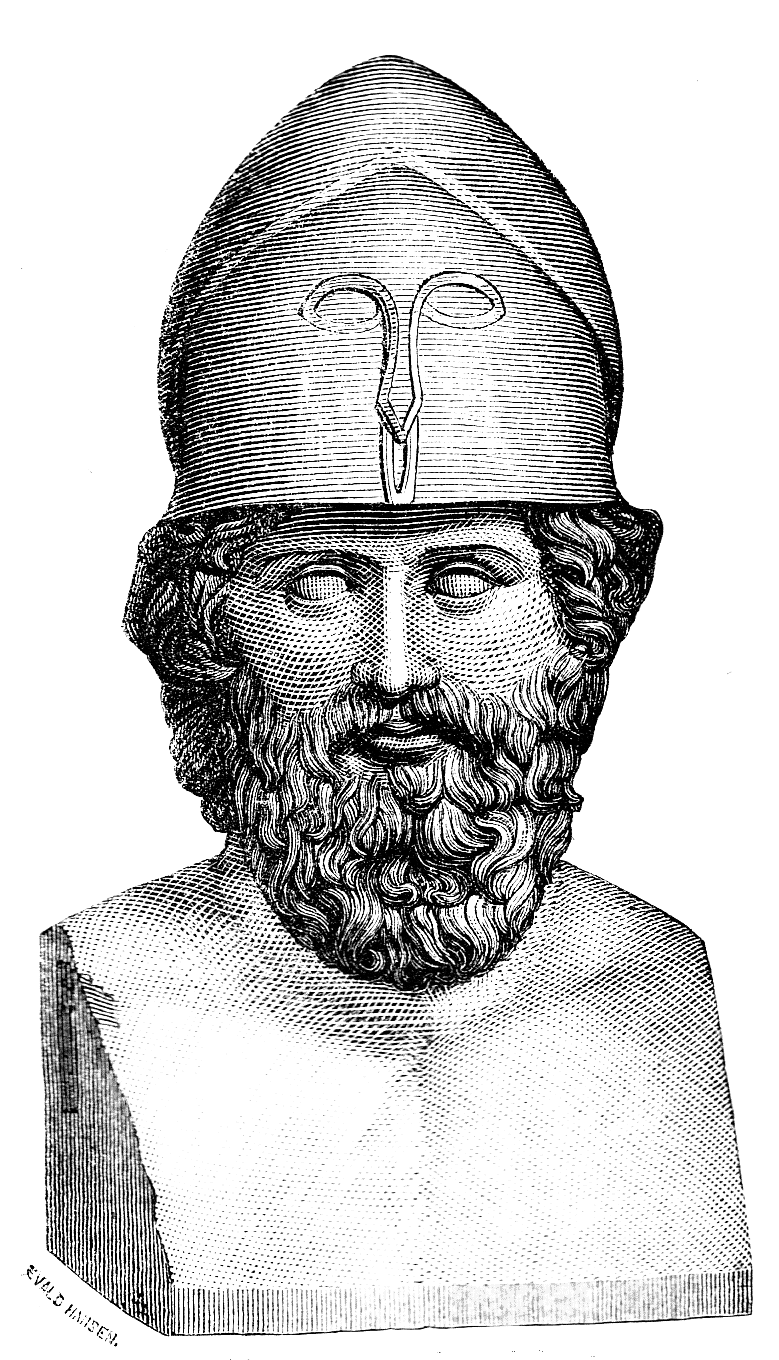
Thanks Themistocles.


Tuesday, January 28, 2014

Sections 4.3-4.4, Due on January 29th

The triangle inequality and the State of the Union
|x+y| < |x| + |y| 

What was difficult for me?
What was originally difficult for me was remembering the properties of Real Numbers that I would later have to use in the proofs.  Some of these properties include:
  • a^2 > 0 for every real number a
  • If a < 0 and n is a positive odd integer, a^n < 0
  • "Of course, the product of two real numbers is positive IFF both numbers are positive or both are negative."
Remembering these facts proved to be very helpful as I moved into solving the actual proofs.  I had a tough time with some of the proofs, especially when fractions were involved.  It was tough for me to see the logic behind multiplying by certain numbers to make the fractions disappear and to make identities and properties more evident.  I feel that I say this a lot, but I believe with more practice I will be able to have a more firm grasp.

Also difficult for me was the use of set notation in proofs.  Just a reminder, there are three types of set notation that are going to be important: intersection, union, difference.  You also have the relative complement of B in A, which is A-B.  You then have the complement of A, which is A with a line over it.  This part was pretty difficult for me, in part due to the use of set notation in proofs.  It was tough remembering properties of sets, and then figuring out how to solve the proof around the set notation.

What did I find interesting?
I am beginning to see that proofs can get more and more complicated.  We had been working with real numbers before, which are pretty simple in terms of their properties.  Now, we are working with real numbers and sets.  I can see how proofs can be applied to many real world applications.  I think of the State of the Union address that President Obama is going to deliver tonight.  Things are not cut and dry in the United States - in fact, I would say they are rather complicated.  This comes as a result of the diversity that is found in the United States, but also comes due to complexities introduced over many years.  I can see how proofs and logical thinking would be helpful in a political environment.  Even though we are only focusing on proofs with real numbers and set notation (which is still uneasy for me), I look forward to more complicated proofs.  Logical thinking is powerful.


Supplementary questions
How long have you spent on homework assignments?  Did lecture and the reading prepare you for them?
I probably spend an hour to an hour and a half on the homework assignments.  I wouldn't say that the reading prepares me much for the homework assignments specifically, but it provides an introduction to the material in class.  I see that as beneficial.  My mind works well with repetition, so that repetition has been beneficial.  We will see if this trend continues over the course of the semester.

What has contributed to your learning in this class thus far?
The same thing that contributes to my learning in anything - the internet.  When I don't understand something, I look it up on the internet.  A simple google search leads to a vast wealth of knowledge.  You can quote me on that.

What do you think would help you learn more effectively or make the class better for you?
I think the professor does a fine job of teaching the material.  Goals for myself would include the following:
  • work out 1 problem from the examples of each section I read.  By doing this, I would be in a much better place to learn during class.  Like I said, repetition is the mother of all learning, and the more I can repeat, the more I'm going to learn.
Thank you Google.


Sunday, January 26, 2014

Section 4.1-4.2, Due on Monday January 27th

What was difficult for me?
"For integers a and b with a ne 0, we say that a divides b if there is an integer c such that b=ac.  We write a | b."

The section Proofs Involving Divisibility of Integers was difficult for me to understand at first.  I understand the concept of dividing integers.  The simple proofs did not give me too much trouble.  However, as I continued to read, the problems increased in difficult.    I had to read through the different proofs a handful of times in order to come away with a firm grasp on what they meant and the thought process behind solving them.  What gave me the most difficult throughout the more difficult problems was just the way they thought through solving the proof using the different properties of being a multiple or a divisor.   I believe with more practice I will come away understanding them more.
The second section we were assigned to read, Proofs Involving Congruence of Integers, was also difficult for me.  I did not really understand the concept of being modulo.  I need to read more into that, and I believe with some basic instruction I will come to understand it.

What was interesting to me?
Whenever I read sections like this, I'm fascinated as to how it was discovered.  For example, the following from the reading:

For integers a,b and n > 2, we say that a is congruent to b modulo n, written a = b (mod n) if n | (a - b).

After reading through the following simple example, I found that so interesting.  It also proved to be true.  I don't quite see exactly how it helps, but I'm excited to learn how.  Reading through these problems, I feel like I'm learning to think like a mathematician.  It's a different way of looking at how to solve problem, and I feel that it will help me better solve statistics problems I am trying to code up.


Thursday, January 23, 2014

3.3-3.5, Due on Friday January 24

What do I think is difficult?
I first found the idea of a contrapositive difficult to understand.  It just didn't make too much sense to me that P -> Q could be equivalent to   ~Q -> ~P.  I understood that it was a theorem, and I think that in a previous life I would have taken that to be true without blinking twice.  But since I've been in this proofs class, I have learned to question thing and prove them to believe them.

It also didn't make sense that you could do a proof by contrapositive.  I thought to myself, "How could you prove something to be true by only talking about their negations.  With more practice, I believe I will become more comfortable with them.

What do I find interesting?
You know, I've done lots of math classes throughout my life.  I've had lot of different tests in my life that have asked me to prove whether things are true or false.  I've never done too well with these problems, mainly because I haven't known different ways to actually do these proofs.

Now, I've learned contrapositive, where I can prove something is true by proving the contrapositive.  I also learned proof by cases.  I feel that with learning these different ways to do proofs, I will be able to not only do better on tests, but to think through things and find out what is true and false by taking a step back and applying one of these different proving methods.  I look forward to using these in homework and seeing how they work.  I also look forward to learning other direct proving methods.

Tuesday, January 21, 2014

Section 3.1-3.2, Due on January 22

What was difficult for me?
trivial proof -  "trivial proof refers to a statement involving a material implication where the consequent, or Q, in PQ, is always true"
vacuous proof - "a vacuous truth is a statement that asserts that all members of the empty set have a certain property."

The concept of a vacuous proof was difficult for me.  I at first didn't understand how it worked.  So I did what I always do when I don't understand something - I went to the internet.  I found this example on wikipedia that helped make so much sense of this.  "For example, the statement "all cell phones in the room are turned off" may be true simply because there are no cell phones in the room. In this case, the statement "all cell phones in the room are turned on" would also be true, and vacuously so, as would the conjunction of the two: "all cell phones in the room are turned on and turned off"."

So despite the original difficulty in understanding vacuous proofs, I figured it out.  My understanding is that when the "if" part of the implication statement is always false, then no matter when the second part of the implication is, the overall implication is going to be true by the truth values in the truth tables.  I could see this being helpful later on down the road.

What did I find interesting?
From this reading, I really enjoyed reading through the "thought process" of the proof analysis.  I loved the introduction of proof strategy.  It aays this from the book - "from time to time, we will find ourselves in a position where we have a result to prove and it may not be entirely clear how to proceed.  In such a case, we need to consider our options and develop a plan."  This is called a proof strategy.  I like this a lot.  Recently, I read a book called Lone Survivor by a Navy Seal who was a part of an op that went wrong.  They didn't know what to do.  But they weighed their options, developed a plan, and moved forward.  We cannot always be paralyzed by fear.  We must learn how to move forward.  I think that many times I have proofs to solve, and I get so confused and scared, that I freeze up.  With a better proof strategy, I think I can be more effective in tackling these proofs.  I enjoyed reading through the different proof analyses, and the way the book tackled these proofs.  With practice, I can see myself becoming quite proficient at these proofs.

Thursday, January 16, 2014

Chapter 0 pages 5-12, Due Jan 17

"So that's what he meant!  Then why didn't he say so?" - Frank Harary, mathematician

What was difficult?
The difficult part of this assignment for me was the amount of small rules that I lived in ignorance of for such a long time that I found it difficult to overcome by bad habits.  I've spent a lot of time mixing words and symbols.  I've used symbols incorrectly.  I also was not aware of "frozen symbols" and therefore have been using them incorrectly for some time.  While these rules were difficult, I believe that just being aware of them now will improve the quality of my mathematical writing.

One of the more difficult parts for me was the use of words such as "any, each, every."  I did not originally see the difference between these words, but upon reading the chapter I was introduced to the vagueness that "any" carries with it.  I understand this, but I believe it is going to be difficult for me to implement its use due to my years of bad mathematical writing practices.

What was interesting?
I think mathematical writing has typically been difficult for me because I never knew what kind of outline to follow, how to plan an outline, or even what an outline for a mathematical assignment was.  In this reading, I loved the part about outlining what you would like to do for your assignment.  I'd like to write out the steps here, and discuss what I liked about each one:

1. Background and motivation
2. The definitions to be presented and possibly the notation to be used
3. The examples to include
4. The results to be presented
5. References to other results you intend to use
6. The order of everything mentioned above

It's important to start from the beginning.  And when a mistake is made, to begin from the beginning.  If you missed something, insert the missing material and start over.

I also really liked the part about writing mathematical expressions on page 8.  Having studied statistics in school, I have experience in LaTex and am looking forward to being able to use it.  I find such things as displays and correct mathematical writing techniques to produce visually pleasing mathematical equations.

The part about using "We" in solving mathematical proofs is great.  I have a friend who tells me that I do this very well - that I include people by using words such as we, let's, us, etc.  

Tuesday, January 14, 2014

2.9-2.10, Due on January 15

What did I find difficult?
The most problematic part of the reading was quantified statements.  Reading through the examples was tough for me.  You have both the universal quantifier, which is an upside down capital A.  Then you have the existential quantifier which is a backwards capital E.  Universal quantifiers can be read as for every.  Existential quantifiers can be read as there exists.

I think this part of the reading was difficult for me because it was new.  Even after reading through the chapter and the numerous examples, I still have a few questions about these quantifiers.  I understand that "the universal quantifier is used to claim that the statement resulting from a given open sentence is true when each value of the domain of the variable is assigned to the variable."
We also have the existential quantifier, which "is used to claim that at least one statement resulting from a given open sentence is true when the values of a variable are assigned from its domain."

After some reading and explanation, I understand the simple uses of both universal and existential quantifiers, but when the reading got to quantified statements involving two variables, that was difficult for me to wrap my head around.  Then, the book left me nervous, talking about when a quantified statement may contain both universal and existential quantifiers!  Good thing that is not until Section 7.2!

What did I find interesting?
I love these laws:
1. Commutative laws
2. Associative laws
3. Distributive laws
4. De Morgan's laws

I really like De Morgan's law.  For some reason I can picture it really well.  The negation of the disjunction of P and Q is the conjunction of the negation of both P and Q.  I can picture that in my head, and I can see how it would be useful for solving problems.  It's a different way of looking at how to solve problems such as these proofs.  Even more importantly, I think these laws teach a fundamental principle of taking a step back, evaluating the situation at hand, and then seeing if you can see a problem you are facing in a different light.  If you can, you should try and attack it from that different angle.  Just like these laws open up a whole slew of new possibilities in solving mathematical proofs, taking a step back and reevaluating can help greatly with problems we face in life.

I also really like quantified statements despite the trouble they are giving me.  First looking at the symbols, I was confused at how to go about using them.  Then I read more about them and it makes sense.  I see the purpose in changing open sentences into statements, especially in a proofs class such as this. 

Saturday, January 11, 2014

2.5-2.8, Due on January 13

What was difficult for me?
After reading this section, the truth tables were a little difficult for me to understand, especially with the biconditional.  (P -> Q)^(Q -> P)  After further reading, my understanding is that it is just a switch, i.e. Q -> is the converse of P -> Q.  If this is true, then the biconditional is P <-> Q.

Then, also difficult for me was the introduction of logical connectives (~,v,^, ->, <->).  I think it was only difficult because it was an introduction to more complicated sentences, these compound statement.  I kind of understood these connectives, but then when we used the truth tables to prove if they were true, it was a little difficult because of the complexity.  I believe with more practice I will improve with these truth tables.  They are new to me.

What did I find interesting?
Life is seldom simple.  A lot of examples in school are simple for the purpose of pedagogy.  But, when looking at things that we experience in real life, we see complex relationships.  Logical connectives and compound statements more accurately reflect scenarios that we see in the world around us.  Especially in working with data, which is what I really like to do.

Lately, I have been working on a project for a company that wants us to do market research.  The company wants to be able to expand and scale their business but they want to do it with quantifiable data in order to make more accurate decisions.  When we first started the project, we assumed that it would be a simple relationship - if we could find one type of data, they would be able to have the necessary information to grow.  But, we found that it was more complex with that.  After learning about these logical connectives, I think I could use them to make connections between the different stats and data types in order to come to better conclusions.  I think I'll give that a try.


Wednesday, January 8, 2014

2.1-2.4, due on January 9

This section is on logic.  

Google defines logic as reasoning conducted or assessed according to strict principles of validity.

What was difficult for me?
The concept of logic was initially difficult for me.  I have always been good at reasoning through problems and arguments, but putting it down officially on paper and analyzing what exactly logic is was difficult for me.  I didn't understand truth values at first, despite how simply they actually are.  After some further reading and research on the web, I learned that truth value is "the attribute given to an argument that gives information about it's truth or falsehood."  Thanks Google for that clarification.
Also difficult for me were the concepts of disjunction and conjunction.  Maybe it was just given the difficulty of the words, and the intimidation that they gave me.  I couldn't understand what these words meant and how they applied to logic, but, after reading more about it I came to this decisive conclusion:
disjunction is the same as as union.  Either argument, or both, can be correct.  Thinking about it thi way made a lot more sense.
The same can be said for conjunction.  It is the same as an intersect.  Either both arguments must be correct or both must be incorrect.  At least that is my understanding of the concept.  As you can tell, it was difficult for me to understand it.

What did I find interesting and relevant?
I think it's so valuable to be able to think through problems using logic.  It's a proven way to determine whether something is true or false.  I kind of like to think of it as a process where the truth will always come out.  You start by proving one thing right.  You then continue on to the next step, which you build off the first step.  By doing this, you are able to build upon previous steps and arrive at a conclusion that was not clear from the beginning, but due to logical steps, has become clear.

My favorite thing from this reading is the idea of implication.  I think that this is commonly used in arguments and thinking throughout the world.  I see myself constantly thinking about things in this way.  I often think of the consequences, or the implications, that certain decisions will have.  I also see things as a chain reaction - "If this is true, then this is true."

Overall, I think logic is a powerful way to reason through problems.  I look forward to learning more about it.